Current Government and State Benefits Available in 2026
Millions of Americans qualify for government assistance programs but never apply—either because they don’t know the programs exist or assume they won’t qualify. The reality is that federal and state benefits extend far beyond what most people imagine, covering everything from food and housing to healthcare, childcare, and utility bills. Whether you’re facing a temporary setback or managing ongoing financial challenges, understanding what’s available can make a meaningful difference in your household budget.
This guide breaks down the major federal and state benefit programs available in 2026, explains who qualifies, and points you toward the right resources to apply.
Federal Nutrition Assistance Programs
SNAP (Supplemental Nutrition Assistance Program)
SNAP remains the largest federal nutrition program, helping over 40 million Americans put food on the table each month. The program provides monthly benefits loaded onto an Electronic Benefits Transfer (EBT) card, which works like a debit card at authorized grocery stores, farmers markets, and some online retailers. Benefits can be used to purchase most food items including fruits, vegetables, meat, dairy, bread, cereals, and seeds or plants that produce food.
Eligibility is based primarily on household income and size. In 2026, most households must have gross monthly income at or below 130% of the federal poverty level—roughly $1,986 per month for a single person or $4,094 for a family of four. Some states have expanded eligibility through broad-based categorical eligibility, allowing households with slightly higher incomes to qualify if they receive other forms of assistance. The average monthly benefit varies by household size and income but typically ranges from $200 to $700 per month for a family.
The table below shows the maximum monthly SNAP benefit and gross income limit by household size for fiscal year 2026 (October 2025 through September 2026). Your actual benefit amount depends on your income, expenses, and household composition.
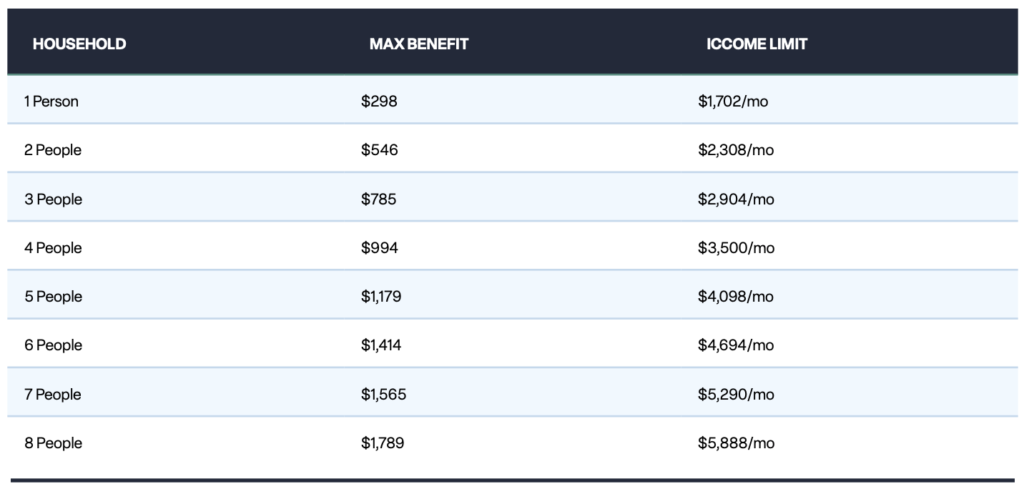
For each additional person beyond 8, add approximately $224 to the monthly benefit and $598 to the income limit. Benefits are adjusted each October.
To apply, contact your local SNAP office or visit your state’s social services website. Many states now offer online applications, and processing typically takes 30 days—though expedited seven-day processing is available for households with very low income or resources.
WIC (Women, Infants, and Children)
WIC provides supplemental nutrition support specifically for pregnant women, new mothers, infants, and children up to age five. Unlike SNAP, WIC benefits are limited to specific nutritious foods: infant formula, milk, eggs, cheese, whole grains, fruits, vegetables, and similar items designed to support healthy development during critical growth periods.
Income eligibility is set at 185% of the federal poverty level, which is higher than SNAP, meaning more families qualify. Participants also receive nutrition education, breastfeeding support, and referrals to other health and social services. WIC is administered through local clinics, and you can find your nearest location through your state health department or the USDA’s WIC website.
School Meal Programs
The National School Lunch Program and School Breakfast Program provide free or reduced-price meals to children from low-income families. Children from households with incomes at or below 130% of poverty qualify for free meals, while those between 130% and 185% qualify for reduced-price meals. Some schools in high-poverty areas offer free meals to all students regardless of individual family income through the Community Eligibility Provision.
Families typically apply through their child’s school at the start of the school year, though applications are accepted anytime. Many states also operate Summer EBT programs that provide additional food benefits during summer months when school meals aren’t available.
Healthcare Coverage Programs
Medicaid
Medicaid provides free or low-cost health coverage to eligible low-income adults, children, pregnant women, elderly adults, and people with disabilities. It covers a broad range of services including doctor visits, hospital stays, prescription drugs, mental health services, and long-term care. For many recipients, there are no premiums and minimal out-of-pocket costs.
Eligibility rules vary significantly by state. In the 40 states (plus Washington D.C.) that have expanded Medicaid under the Affordable Care Act, adults with incomes up to 138% of the federal poverty level—about $20,800 annually for an individual in 2026—generally qualify. In non-expansion states, eligibility is more limited and often restricted to specific categories like parents of dependent children, pregnant women, or people with disabilities. Children typically qualify at higher income levels than adults through the Children’s Health Insurance Program (CHIP).
You can apply for Medicaid through your state’s Medicaid agency, through HealthCare.gov during open enrollment, or at any time if you experience a qualifying life event. Many states have streamlined online applications, and enrollment can often be completed in a single session.
Medicare Savings Programs
If you’re enrolled in Medicare but struggle with premiums, deductibles, and copays, Medicare Savings Programs can help. These state-administered programs pay some or all of your Medicare Part B premiums and, in some cases, Part A premiums, deductibles, and coinsurance. There are four levels of assistance with different income thresholds, and qualifying automatically enrolls you in Extra Help for prescription drug costs.
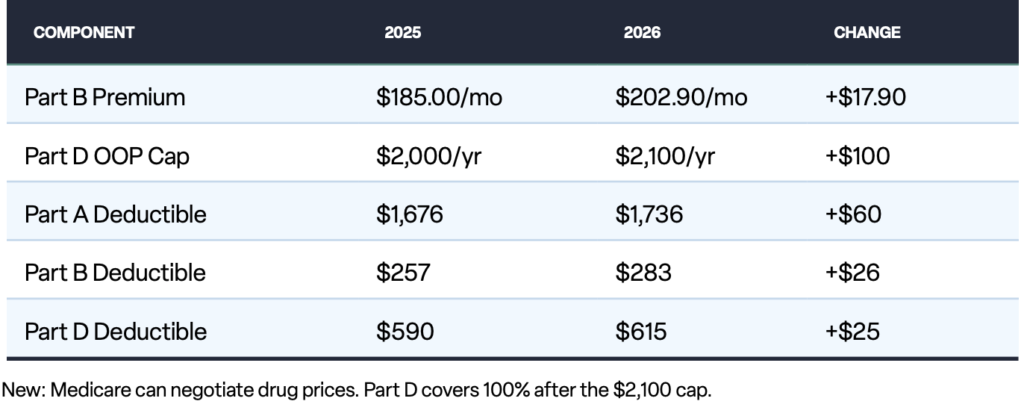
The Extra Help program (also called Low-Income Subsidy) specifically reduces prescription drug costs for Medicare beneficiaries. It can save eligible individuals an average of $5,000 per year on medications. Eligibility is based on income and resources, and you can apply through Social Security, your state Medicaid office, or online at ssa.gov.
ACA Marketplace Subsidies
If your income is too high for Medicaid but you don’t have affordable employer coverage, the Affordable Care Act marketplace offers subsidized health insurance. Premium tax credits reduce your monthly premium costs, and cost-sharing reductions lower your deductibles and copays if you choose a Silver-level plan and have income below 250% of the poverty level.
Subsidies are available to households with incomes from 100% to 400% of the poverty level in most states, with no upper income cliff for premium tax credits under current law. You can explore plans and estimate your subsidies at HealthCare.gov or your state’s marketplace during annual open enrollment (typically November through mid-January) or anytime you experience a qualifying life event like job loss or a change in household size.
Housing Assistance Programs
Section 8 Housing Choice Vouchers
The Housing Choice Voucher program, commonly called Section 8, helps low-income families, seniors, and people with disabilities afford safe, decent housing in the private market. Participants find their own housing—apartments, townhouses, or single-family homes—and the voucher covers a portion of the rent, with tenants typically paying 30% of their adjusted income toward housing costs.
Eligibility is based on income (generally below 50% of area median income), family size, and citizenship or eligible immigration status. Demand far exceeds supply, and most local housing authorities maintain waiting lists that can stretch for months or even years. When waiting lists open, it’s important to apply promptly. Contact your local Public Housing Authority to check availability and application procedures.
Public Housing
Public housing provides affordable rental units owned and operated by local housing authorities. Rent is typically set at 30% of household income, making it accessible to very low-income families. Units range from single-family homes to high-rise apartments, depending on the location. Like Section 8, demand is high and waiting lists are common. Your local housing authority manages applications and can provide information about available properties and wait times.
LIHEAP (Low Income Home Energy Assistance Program)
LIHEAP helps low-income households pay heating and cooling bills, reducing the risk of utility shutoffs and unsafe living conditions. The program provides direct payments to utility companies on behalf of eligible households, and some states also offer weatherization assistance to improve energy efficiency and reduce future bills.
Eligibility varies by state but generally covers households with incomes up to 150% of the poverty level or 60% of state median income. Benefits are typically distributed during heating and cooling seasons, and funds are limited—so applying early in the season improves your chances of receiving assistance. Contact your state or local LIHEAP agency or visit the federal LIHEAP website to find your local program.
Cash Assistance and Tax Credits
TANF (Temporary Assistance for Needy Families)
TANF provides temporary cash assistance to low-income families with children. Benefits vary widely by state—from less than $300 per month in some states to over $700 in others—and are intended to cover basic needs while families work toward self-sufficiency. Most states require recipients to participate in work activities, job training, or education programs.
Eligibility is restricted to families with dependent children and very low income and resources. Time limits apply: federal law caps lifetime benefits at 60 months, though some states impose shorter limits. TANF also funds other services like childcare assistance, job readiness programs, and emergency aid, even for families not receiving monthly cash benefits. Apply through your state’s social services or human services agency.
Earned Income Tax Credit (EITC)
The EITC is one of the most significant federal benefits for working families, providing a refundable tax credit that can put thousands of dollars back in your pocket. For tax year 2025 (filed in 2026), the maximum credit ranges from around $650 for workers without children to over $7,800 for families with three or more qualifying children. Because it’s refundable, you receive the full credit even if it exceeds your tax liability.
To qualify, you must have earned income from employment or self-employment, meet income limits (which vary by filing status and number of children), and file a tax return—even if you’re not otherwise required to file. Many eligible workers miss out simply because they don’t file. Free tax preparation assistance is available through IRS Volunteer Income Tax Assistance (VITA) sites and the Free File program.
Child Tax Credit
The Child Tax Credit provides up to $2,200 per qualifying child under age 17, with a refundable portion (the Additional Child Tax Credit) available to families who don’t owe enough taxes to claim the full amount.
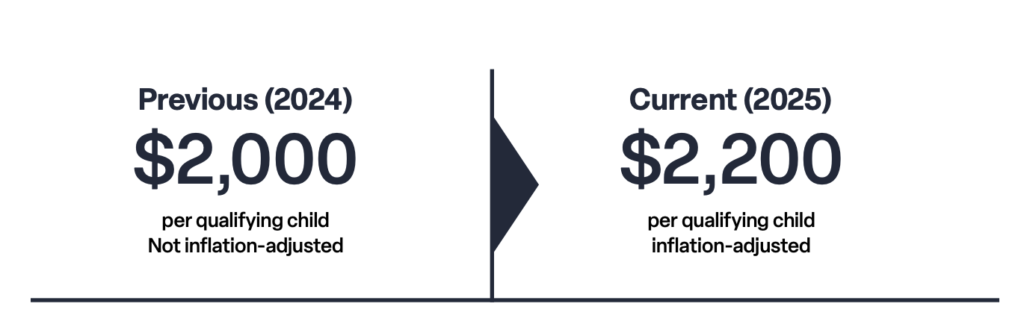
Income phase-outs begin at $200,000 for single filers and $400,000 for married couples filing jointly, meaning most families with children qualify for at least a partial credit.
You claim the credit when filing your federal tax return. No separate application is needed—just ensure you’re including all qualifying children and meeting the relationship, residency, and support requirements.
Childcare and Education Assistance
Child Care and Development Fund (CCDF)
The CCDF helps low-income families pay for childcare so parents can work or attend school. Subsidies are provided through state-administered voucher programs, and eligible families can choose from a range of licensed providers including daycare centers, family childcare homes, and in some cases, relatives. The amount of assistance depends on family income, size, and local childcare costs.
Eligibility generally requires that parents are working, in job training, or attending school, and that household income falls below state-set thresholds (often 85% of state median income, though many states set lower initial eligibility limits). Waiting lists exist in many areas due to limited funding. Apply through your state’s childcare assistance agency or social services department.
Head Start and Early Head Start
Head Start provides free early childhood education, health services, and family support to children from birth to age five in low-income families. Programs operate through local grantees—schools, community organizations, and tribal agencies—and focus on school readiness through developmentally appropriate learning experiences. Eligibility is based on federal poverty guidelines, with priority for families receiving TANF or experiencing homelessness.
Federal Student Aid
For higher education, the federal government offers grants, loans, and work-study opportunities through the Free Application for Federal Student Aid (FAFSA). Pell Grants—which don’t need to be repaid—provide up to $7,395 per year (2025-26 award year) for undergraduate students with exceptional financial need. Subsidized loans, where the government pays interest while you’re in school, are available to students with demonstrated need, while unsubsidized loans are available regardless of financial need.
Complete the FAFSA annually at studentaid.gov. The application opens October 1 for the following school year, and submitting early improves your chances of receiving limited funds like work-study.
How to Find and Apply for Benefits
Navigating multiple programs can feel overwhelming, but several resources simplify the process. Benefits.gov is the federal government’s official benefits finder—answer a series of questions about your situation, and the tool identifies programs you may qualify for at both federal and state levels. Your state’s social services or human services agency typically administers most major programs and can provide application assistance.
Many communities also have local organizations—United Way’s 211 helpline, community action agencies, and nonprofit service providers—that offer free help identifying benefits and completing applications. If you’re working with limited time or facing barriers like language access or disability accommodations, these organizations can be especially valuable.
The most important step is simply to apply. Many eligible individuals never receive benefits because they assume they won’t qualify or find the process too complicated. Even if you’re uncertain, submitting an application costs nothing and could connect you with support that makes a real difference in your financial stability.